Payroll Taxes by State
Each state sets its own payroll taxes on top of federal payroll taxes. Select a state on the map to see its payroll tax rates, wage bases, registration steps, filing deadlines and employer rules.
Last updated: November 9, 2026

Each state sets its own payroll taxes on top of federal payroll taxes. Select a state on the map to see its payroll tax rates, wage bases, registration steps, filing deadlines and employer rules.
Last updated: November 9, 2026
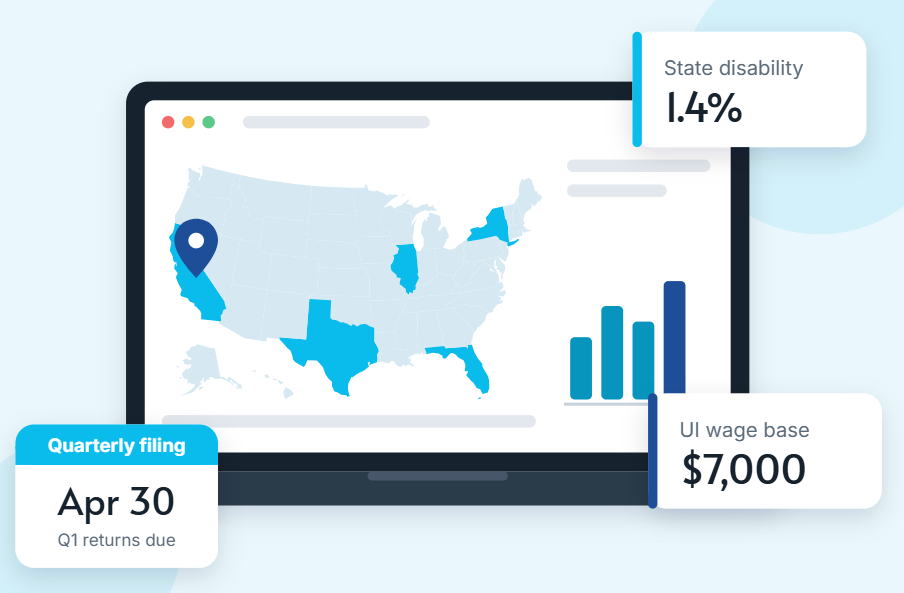
Every state page follows the same structure, so you can compare states quickly or set up payroll in a new state without starting from scratch. Each guide covers:
– A rate table for every state payroll tax, with who pays it, the wage base and whether the 2027 figure is confirmed or still pending
– What changes in 2027 and what you need to update before the first payroll of the year
– Employer-paid taxes, such as state unemployment insurance, and employee taxes you withhold, such as state income tax and disability insurance
– Worked examples that show the dollar cost per employee at different salaries
– How to register as an employer, deposit schedules, quarterly filing deadlines and penalties
– Local taxes, state wage rules that affect payroll, and how to handle remote and multi-state employees
Federal payroll taxes apply the same way no matter where your employees work. These are the 2027 figures:
| Federal tax | Employer pays | Employee pays | 2027 wage base |
|---|---|---|---|
| Social Security | 6.2% | 6.2% | $192,300 |
| Medicare | 1.45% | 1.45%, plus 0.9% on wages over $200,000 | No limit |
| FUTA (federal unemployment) | 6.0%, usually 0.6% after the state credit | None | $7,000 |
The Social Security wage base comes from the Social Security Administration. The FUTA rate is where states start to matter. Employers in states that pay their state unemployment taxes on time get up to a 5.4% credit, but that credit shrinks in states with unpaid federal loans. California is the main example, and its guide shows the dollar impact per employee.
Nine states do not tax wages: Alaska, Florida, Nevada, New Hampshire, South Dakota, Tennessee, Texas, Washington and Wyoming. In these states you do not withhold state income tax from paychecks, but you still pay state unemployment insurance, and some of them run other payroll programs, such as paid family leave. Each state guide lists what applies.
If you have remote or traveling employees, you may need to register and file in more than one state. Unemployment tax usually goes to one state per employee, chosen by where most of the work happens, while income tax can be owed to both the state where the employee lives and the state where they work. Each state guide explains its own rules, and our payroll compliance checklist helps you keep track of every registration and filing. If you would rather not manage several state accounts yourself, Hybrid Payroll’s HR and payroll solutions handle multi-state filings for you.